Meillä ei valitettavasti ole hakuasi vastaavia esineitä.
- Teema- ja vasarahuutokaupat
- /
- Leopold Fare
Leopold Fare
SuodataSuodata ja lajittele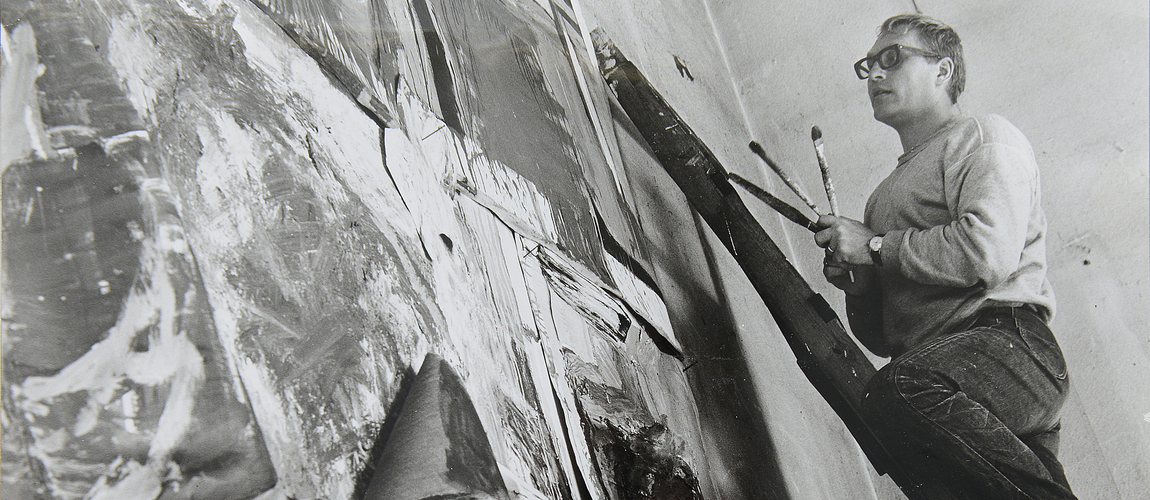
Leopold Fare
15 loka 2026 · Formstad Auktioner
In this themed auction, we present an unusually broad selection of works by Leopold Fare (1926–1996), sourced directly from the artist's family. The collection spans his career—from a still life painted in 1950 and works from his early student years, through the figurative painting and experimentation of the 1960s and 70s, to the trees of Österlen, his travels to the south, and the expressive, colourful paintings of the 1990s. Together, these works invite us to follow Fare through virtually his entire artistic life.
Fare began his studies at Otte Sköld’s School of Painting in 1949, continued at the Académie Libre under Lennart Rodhe, and studied at the Royal Institute of Art from 1951 to 1956, with Ragnar Sandberg as his principal instructor. During this time, he became part of the emerging artistic community in Stockholm’s western suburbs. He co-founded the Vällingby Art Association in 1954, moved to the Strandliden artists' colony in Hässelby in 1957, and the following year initiated the group exhibition Futten. In 1959, he formed the Hässelby Group together with Ruben Heleander and Gösta Sundström. Over the course of the decade, Fare thus evolved from a student into an independent and active figure in Stockholm’s art scene.
The early works in the auction reveal a side of Fare that is less well-known today. The selection includes still lifes, portraits, figure studies, and abstract compositions. During the 1960s, he worked in a large studio in Hässelby Villastad, where he focused primarily on large-scale figure paintings. The monumental format remained a recurring feature of his artistic practice and is evident in this collection—not least in the auction’s largest paintings. The 1960s marked a period of expansion and experimentation, allowing room for figuration, abstraction, and increasingly large formats.
Over the years, the landscape became increasingly significant. Fare built a studio in Österlen, where he worked for half the year, while also making regular painting trips to locations such as Provence. The works in the auction trace how trees, vegetation, and the landscape gradually become the vehicles for color. Pieces from Österlen dating from the late 1980s and early 1990s reveal a style in which the subject matter sometimes almost dissolves into rhythm, movement, and fields of color. In his later period, colour gains increasing autonomy, eventually almost overtaking the subject matter to become the painting's primary driving force.
Colour was central to Fare—something he himself expressed clearly: "I want maximum colour. Ideally, the paintings should come thundering in with colour, asserting their presence right in the middle of the room." This description is particularly apt now that his works can be viewed together. While the mode of expression shifts from the more restrained paintings of the 1950s to the large canvases of his later years, his use of colour becomes increasingly free and assured over time. Fare also articulated his artistic vision in another way: "I want to show something that no one has seen before, yet still recognizes." Through works that have remained within the family, one can trace an artist’s journey of searching, experimenting, revisiting themes, and evolving over more than four decades—a voyage through time across Leopold Fare’s body of work, from his early years of study to the vibrant colour visions of his final years.
Käynnissä olevat huutokaupat
Tässä ovat arkistossamme olevat esineet, jotka vastaavat hakuasiNäytä kaikki esineet