Terence Conran, born in 1931 in Surrey, England, grew up in an entrepreneurial household that sparked his early fascination with making and design. Studying textile design at the renowned Central School of Arts and Crafts, Conran’s modern yet practical sensibilities quickly set him apart. Working alongside influential artist Eduardo Paolozzi, he embraced a multidisciplinary approach, while his experience with the 1951 Festival of Britain deepened his vision for accessible, collaborative design. In the early 1950s, he founded Conran and Company, a Notting Hill workshop where his encounters with continental style, particularly French culinary and interior traditions, nurtured his love for elegant, functional living.
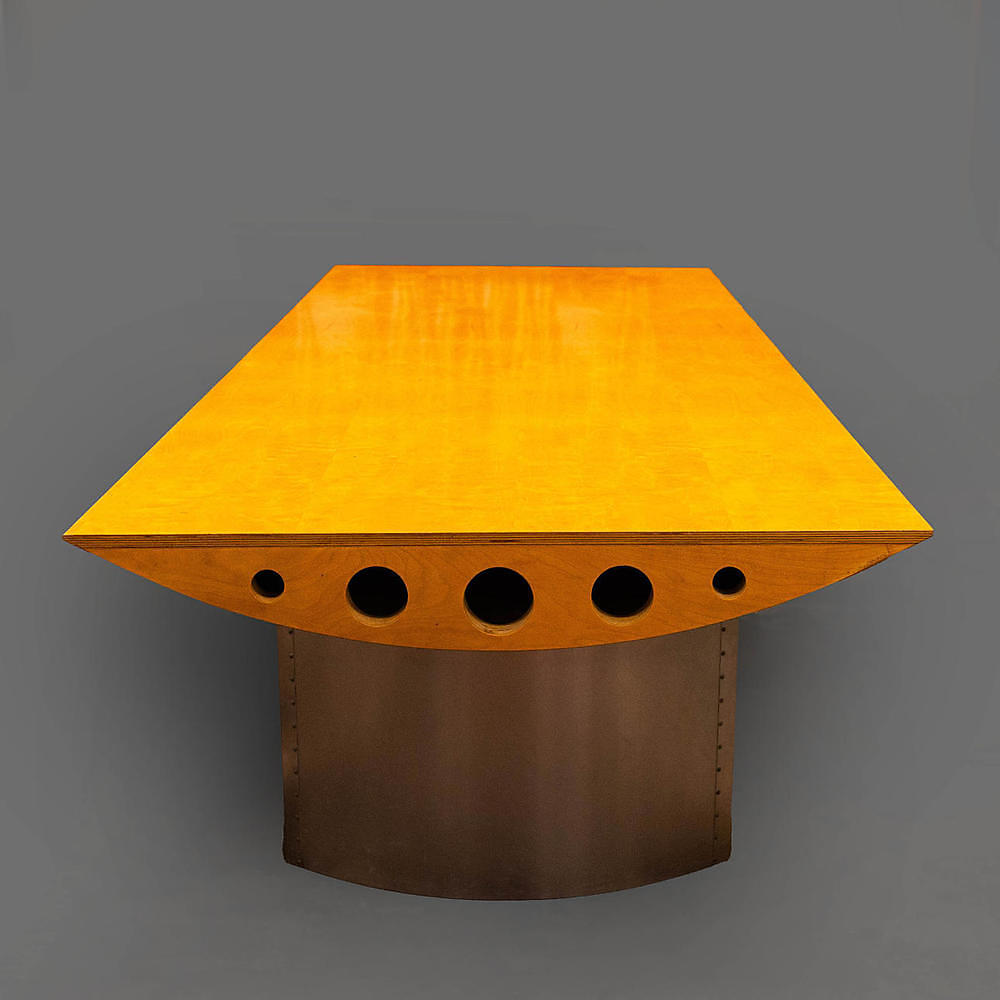
Dining table, "Mosquito wing", clubbed for 800 GBP at Lots Road Auctions.
Shaping Modern Britain: Habitat and the New Home
Conran’s defining mark came in 1964 with the opening of the first Habitat store in Chelsea. At a time when British interiors felt staid and conventional, Habitat introduced fresh, affordable furniture and home goods designed for contemporary lifestyles. The store pioneered concepts like flat-pack furniture and modular shelving in britain, and its vibrant, modern aesthetic captured the imagination of a new generation. Driven by the belief that good design should enrich daily life, Conran expanded Habitat into an international symbol of democratic, joyful living. His entrepreneurial momentum continued with ventures like Heal’s and the iconic Conran Shop, making modern design ever more accessible.
A Lifelong Legacy: Transforming Culture Through Design
Terence Conran’s vision extended well beyond retail. In 1953, he helped revolutionize British dining by opening Soup Kitchen, and over the years he shaped London’s restaurant scene into one renowned for quality and innovation. As the founder of London’s Design Museum, Conran championed the societal value of design education. Knighted in 1983 and serving as Provost at the Royal College of Art, he nurtured talent and influenced future generations. When he passed away in 2020, Conran left behind a legacy built on the conviction that thoughtful design could change lives, and did so for millions around the world.