Gordon Russell, born in 1892 in Cricklewood, London, found his creative compass in the rolling hills of the Cotswolds, where he grew up immersed in the Arts and Crafts movement. His formative years in Broadway, Worcestershire, where his father transformed the Lygon Arms into a hub of artisanal activity, introduced him to the values of skilled workmanship and vernacular design. Attending Chipping Campden School, Russell absorbed the ethos championed by Ernest Gimson and the Guild of Handicraft, laying the groundwork for his devotion to honest, well-crafted furniture. At sixteen, Russell left school to work in his father’s antique restoration workshop, learning firsthand the skills and sensibilities that would inspire his lifelong mission to unite handcraft with industrial innovation.
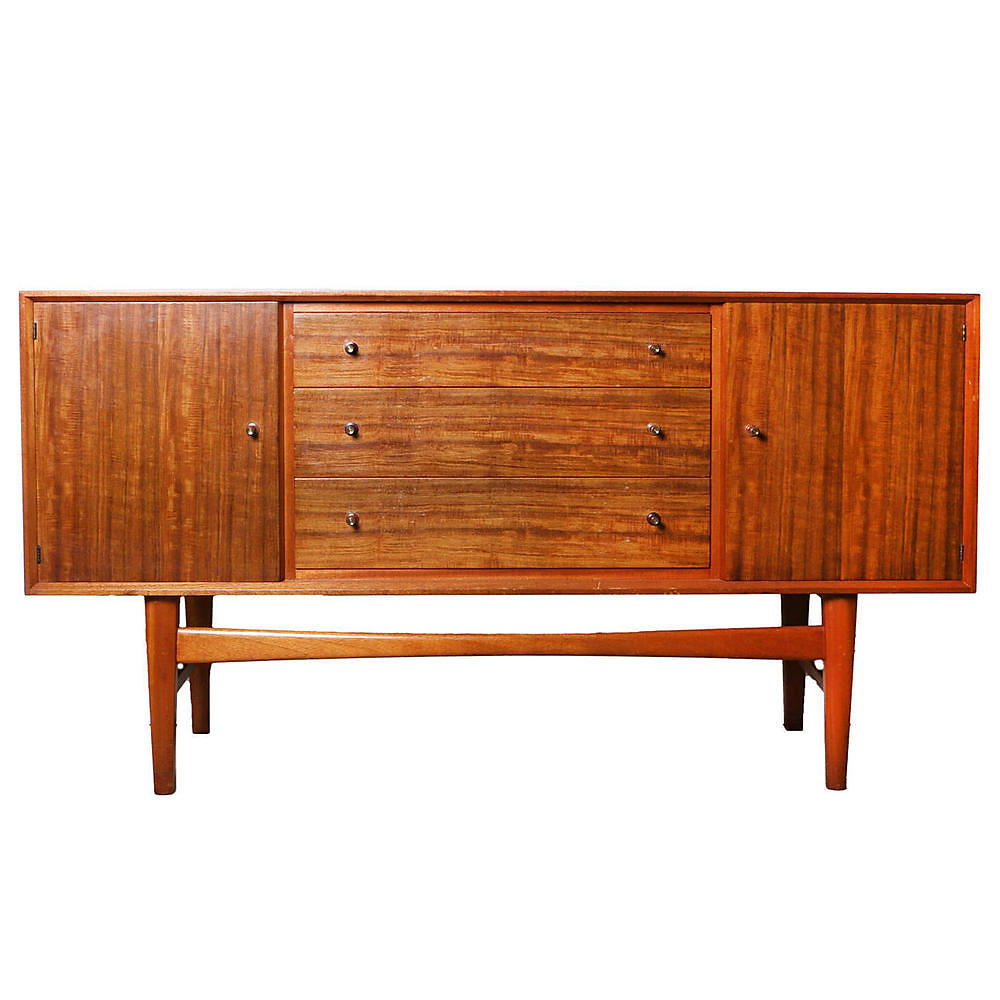
Sideboard, clubbed for 350 GBP at Bishop & Miller.
From Battlefield to Workshop: The Visionary Response to a Changing World
Russell’s outlook on design was indelibly shaped by his experiences in World War I, where his courage on the Western Front earned him the Military Cross. The conflict’s devastation fueled his determination to help rebuild society through accessible, restorative design. In 1922, supported by his father, he founded Gordon Russell Ltd, guided by the conviction that “decent furniture for ordinary people” could uplift homes and lives. His work, especially alongside his brother Dick, gained national and international recognition, most notably winning gold at the 1925 Paris Exhibition. With a focus on honest materials and imaginative forms, Russell seamlessly combined Arts and Crafts ideals with emerging industrial practices.
A Legacy of Accessible Design: Education, Innovation, and Enduring Ideals
Russell’s contribution extended far beyond his workshop. As a Royal Designer for Industry and the visionary behind wartime utility furniture, he made high-quality, functional design accessible to millions. His leadership at the Council of Industrial Design influenced generations of makers and underscored the importance of education and social purpose in design. Though he passed away in 1980, Russell’s holistic vision, celebrated at the Gordon Russell Design Museum, continues to inspire, reminding us that thoughtfully designed, well-crafted objects can profoundly transform daily life.