Magnus Gustafsson, better known by his artist name NUG, was born in 1972 in Sweden and became one of the country’s most influential, and controversial, graffiti artists. Growing up in an era when graffiti culture was spreading from New York to Europe, NUG was drawn to its energy, anonymity, and defiance of traditional art norms. He studied at Konstfack, Sweden’s University College of Arts, Crafts and Design, where he explored how street art could intersect with contemporary fine art.
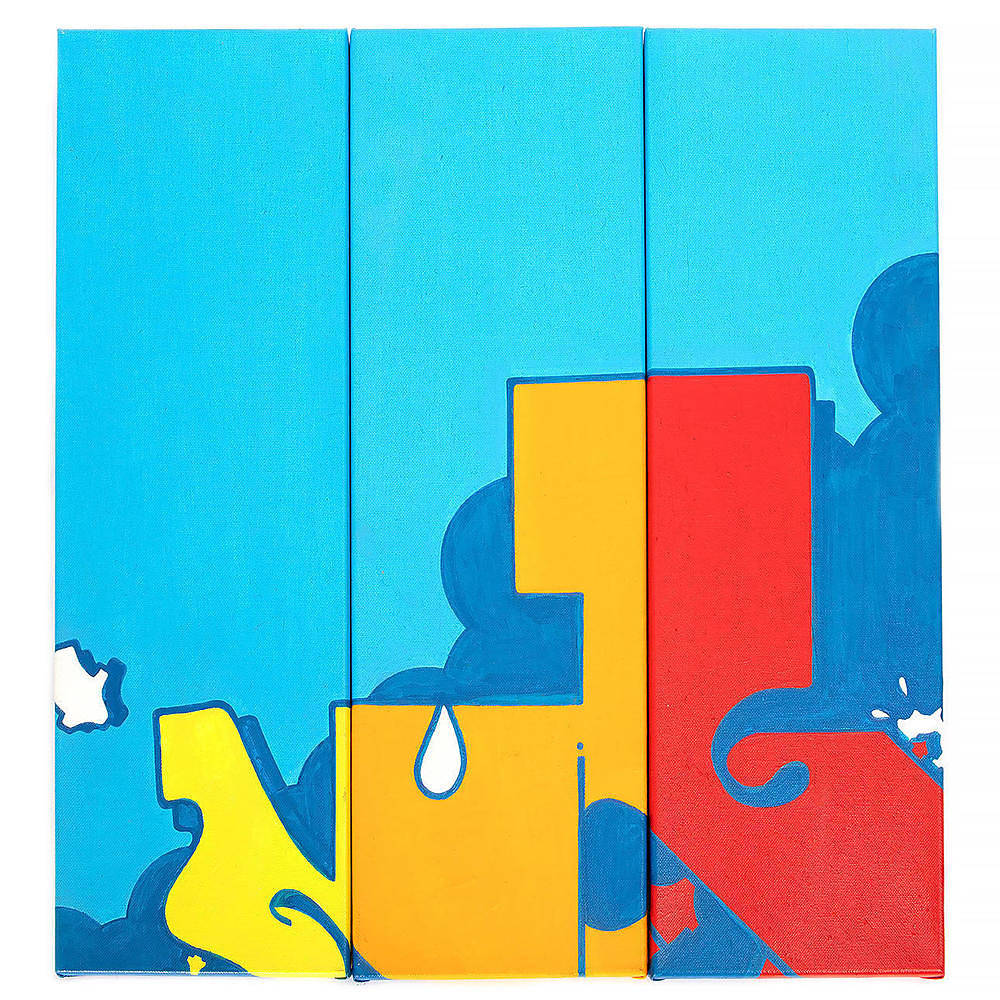
Acrylic on canvas, clubbed for 930 GBP at Stockholms Auktionsverk.
Graffiti, Performance, and Controversy
NUG’s work blends graffiti techniques with performance and video art, often testing the boundaries between vandalism and artistic expression. One of his most discussed projects, Territorial Pissing (2009), featured him spray-painting inside a train while dressed in black and wearing a mask. The piece, which was part of his graduation work at Konstfack, sparked intense public debate in Sweden about the legitimacy of graffiti as art and the role of institutions in supporting provocative work. His graffiti style is raw, fast, and gestural, often verging on abstraction. By focusing on the act of painting rather than the finished image, NUG aligns himself with action painting traditions, while still firmly rooted in urban street culture.
Recognition, Influence, and Legacy
While some view NUG as a provocateur, others see him as a critical voice challenging the boundaries of public space, property, and creative freedom. His work has been exhibited in galleries and museums across Europe, including Moderna Museet, showing that graffiti can be part of institutional art discourse without losing its edge. NUG has inspired younger generations of street artists to experiment with form, context, and performance. Today, he remains a polarising but undeniably significant figure in contemporary Scandinavian art, an artist who forces audiences to confront the uneasy intersection of rebellion and recognition.