Wir haben leider keine Objekte, die mit Ihrer Suche übereinstimmen.
- Themen- und Saalauktionen
- /
- Decorate with Finnish Ceramics
Decorate with Finnish Ceramics
FilternFiltern und sortieren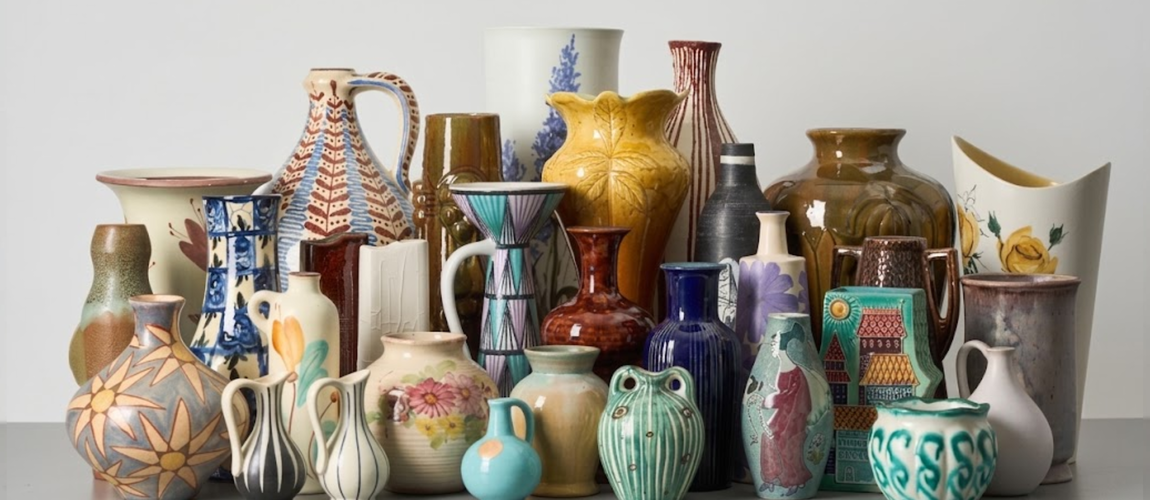
Decorate with Finnish Ceramics
4 Okt 2026 · Stockholms Auktionsverk Helsinki
Finnish ceramics boast a long and distinctive tradition, where solid craftsmanship meets function, form, and a keen sense of material. Several significant ceramic manufacturers emerged during the first decades of the 20th century, and their wares reflect both the stylistic ideals of the era and everyday Finnish life.
Arabia was founded in Helsinki in 1873 and came under Finnish ownership in 1916. During the 1920s, the factory underwent modernization and developed an increasingly independent design language. The period from 1917 to 1932 is of particular interest to collectors, as Arabia was then in a dynamic phase transitioning from traditional faience production to the modern Finnish design that would later achieve international renown.
Kupittaan Savi was founded in Turku in 1921 and became known for its hand-decorated functional and ornamental wares. Unlike Arabia, the factory maintained a more down-to-earth, everyday profile, producing items for a broad audience. Its often colorful decorations and distinctive hand-painted details have made Kupittaan Savi a cherished part of Finnish ceramic history.
Turun Kaakelitehdas, founded in 1874, became one of the Nordic region’s leading manufacturers of tiled stoves. For several decades, the factory produced richly decorated tiled stoves and ceramic products before shifting its focus increasingly toward wall and floor tiles. Rakkolanjoen kaakelitehdas was another significant player in Finnish tile and ceramic production during the late 19th and early 20th centuries.
Together, the objects in this private collection tell the story of a time when ceramics were not merely functional items but also an important part of the home’s aesthetic. Here, Art Nouveau, Classicism, and early Modernism converge—featuring glazes, colors, and forms that remain just as decorative and contemporary today.
Laufende Auktionen
Hier sind Objekte aus unserem Archiv, die mit Ihrer Suche übereinstimmen.Alle Objekte anzeigen