Vi har desværre ingen genstande, der matcher din søgning.
- Hammerslags- og temaauktioner
- /
- Gastón Olalde - Drawings
Gastón Olalde - Drawings
FiltrerFiltrer og sorter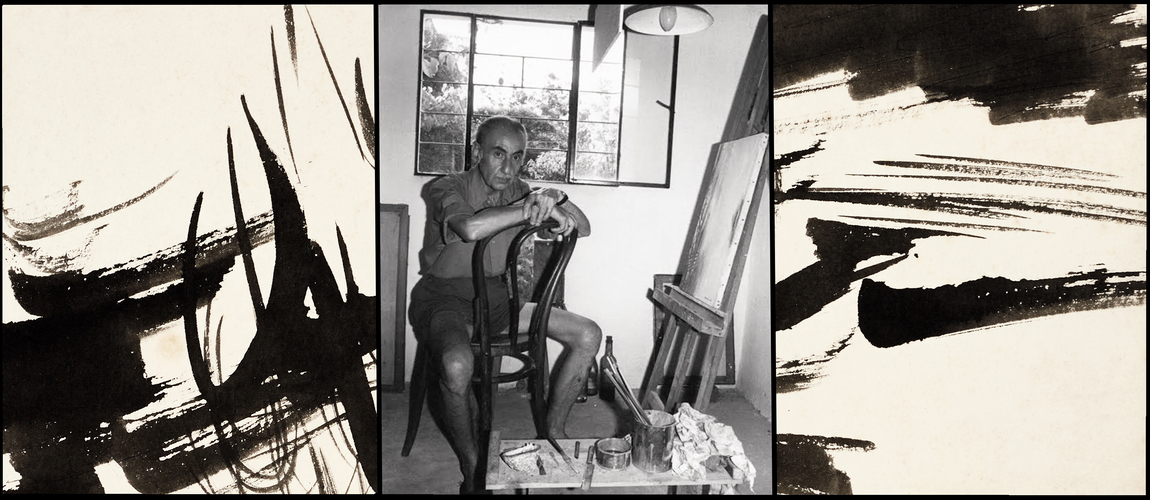
Gastón Olalde - Drawings
5 feb 2026 · Crafoord Auktioner Stockholm
Gastón Olalde’s (1925–2003) stepdaughter, Amalia, could hardly believe her eyes when she opened the folder containing his artworks, which she had received after his death.
Gastón had always valued her artistic eye and judgment highly. Whenever she visited him in Uruguay from Stockholm, carrying tubes of oil paint that Gastón had requested, it would become a small ritual: Gastón would show the works he had been developing over the past year and ask for her opinion.
But this—what she now held in her hands—she had never seen before. A folder overflowing with drawings brimming with a lively energy, more spontaneous, freer, and wilder than anything else in Gastón Olalde’s repertoire.
Gastón Olalde was a cultivated man whose life revolved around his own creative work as well as classical music, literature, and philosophy. He was born and lived in Montevideo, Uruguay. Like Piet Mondrian and Wassily Kandinsky, he came in the 1940s to work alongside the internationally influential Uruguayan artist Joaquín Torres-García, first as a student and later as a member of the artist group Taller Torres-García (TTG), founded by Torres-García, within the modernist movement known as Universal Constructivism. The ambition was to create a unique Latin American modernism rooted in the country’s cultural and historical heritage.
After Torres-García’s death in 1949, Olalde continued to develop his mentor’s artistic ideas within the group. In 1956, he was one of the co-founders of the artist collective Sótano Sur in Montevideo.
Gastón Olalde painted constantly—on whatever was at hand: canvases, panels, pasta boxes, cornflakes packets… When he needed to express himself, there was no time, and sometimes no budget, to search for the perfect materials. He was strict with himself; much was reworked or simply discarded. He was exploratory and constantly searching, also working in ceramics and jewelry alongside painting. His style ranged from figurative to more frequently abstract works. The common denominator was the pursuit of the exact expression. Gastón was methodical in everything he undertook, even in how he rested for siesta or paused to smoke his Gauloises. Nothing was overlooked. Paintings were allowed to take the time they needed.
Gastón Olalde exhibited in New York (Praxis), Barcelona (Galeria Dalmau), and EXPOBA (Buenos Aires), among others. His oil paintings have previously been offered at international quality auctions alongside works by Miró, Matisse, and Warhol.
At Crafoord Stockholm, we are extremely pleased to now offer some sixty long-unknown drawings by Olalde, thereby revealing a side of an artist who was a significant figure in progressive art in Uruguay.
Igangværende auktioner
Her er genstande fra vores arkiv, der matcher din søgningVis alle genstande