Marie-Louise Ekman, born in Stockholm in 1944 and previously known as Marie-Louise De Geer and Marie-Louise De Geer Bergenstråhle, is one of Sweden’s most influential contemporary artists. Over a career spanning more than five decades, Ekman has worked across painting, film, theatre, sculpture, and textiles, becoming renowned for her unique ability to blend art, life, and popular culture. Her fearless exploration of themes such as gender, sexuality, family, and social conventions – often through a lens of absurd humor and surrealism – has made her a towering figure in Swedish cultural life.
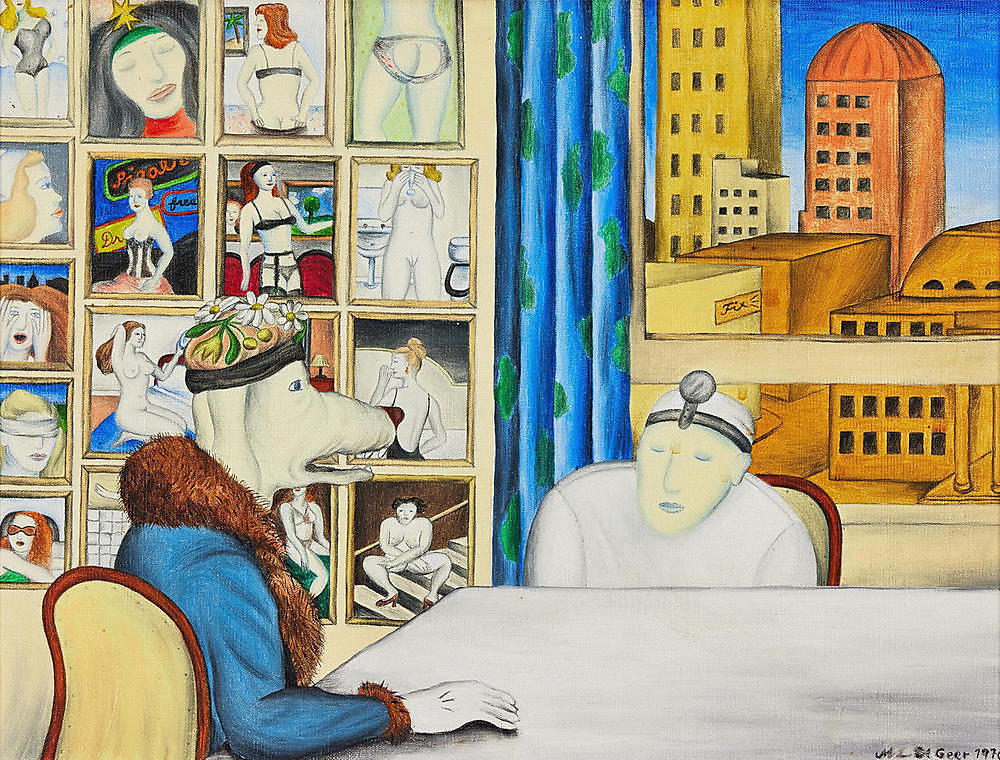
"At the Doctor", clubbed for 4 282 GBP at Stockholms Auktionsverk.
Absurdist Humour and Social Critique
Emerging onto the politically charged 1960s art scene, Ekman quickly established a distinctive language. Her early paintings, often described as pop naivism, are renowned for their vibrant, almost garish colors, depicting everyday settings and human relationships with a provocative, surrealist twist. She explored themes of identity and feminism, frequently incorporating popular culture elements and comic strip aesthetics. Her collaboration with Carl Johan De Geer on the underground magazine PUSS further cemented her reputation as a boundary-crossing force in Swedish contemporary art. Ekman’s cinematic and theatrical work, such as the films Hallo Baby (1976) and Barnförbjudet (1979), extends these thematic concerns, using satire and theatricality to expose the absurdities and contradictions of bourgeois life.
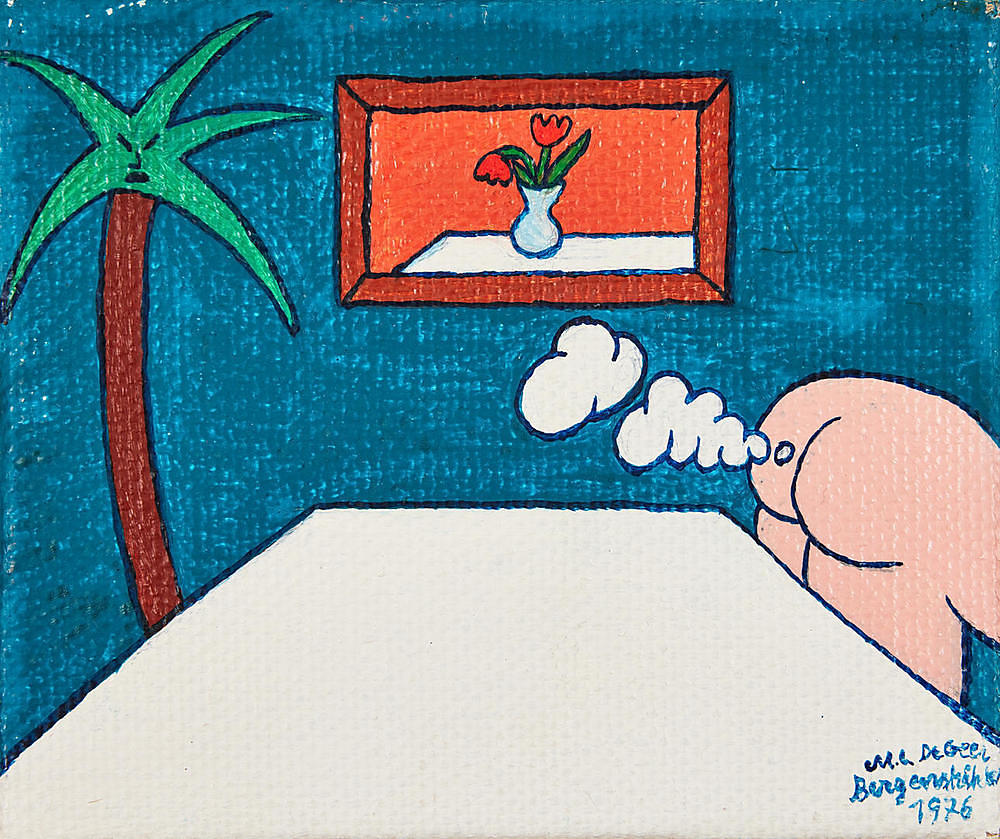
Oil on canvas.
Legacy and Influence
Marie-Louise Ekman served as a professor of painting at the Royal Institute of Art (Kungliga Konsthögskolan) in Stockholm from 1984 to 1991, and later as its rector from 1999 to 2005. She was the manager of Dramaten, Sweden's Royal Dramatic Theatre, from 2009 to 2014, championing innovative and thought-provoking productions. Her prolific career, also marked by her marriage to the late actor and director Gösta Ekman (1989–2017), was celebrated in a major retrospective exhibition at Moderna Museet in 2017. Ekman’s provocative works and clear-sighted critiques of normality continue to resonate, inspiring generations of artists and shaping the cultural landscape.