Charles John Noke began his artistic journey in Worcester, England, where he studied at the Worcester School of Design and apprenticed at just sixteen in the renowned Royal Worcester porcelain works, learning his craft under Charles Binn. Noke swiftly gained recognition for his innate talent in modeling and decoration, setting him apart among his contemporaries. After fifteen years at Worcester, his skills led him to a pivotal role at Doulton in Burslem in 1889, where under John Slater’s guidance, he became chief designer. This move proved transformational, placing Noke at the heart of British art pottery during a period ripe with innovation.
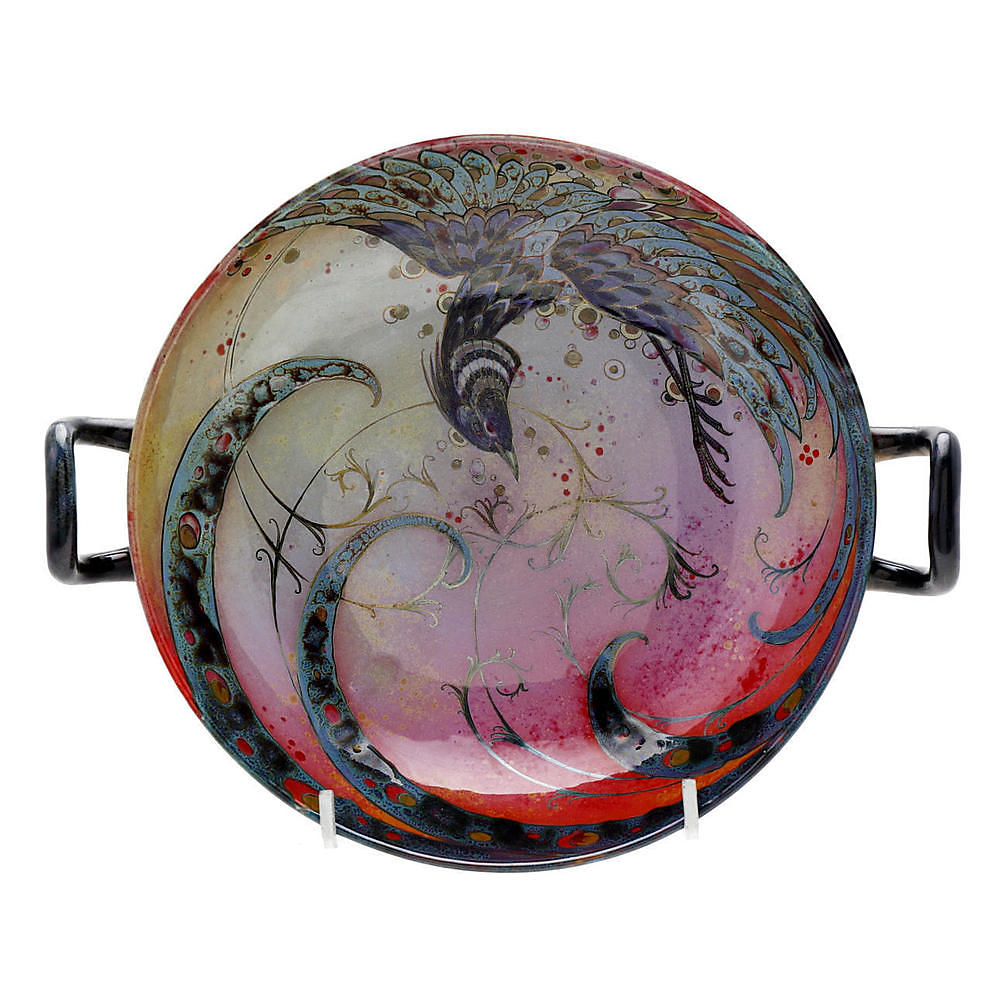
"Sung", centrepiece with handles, clubbed for 1 991 GBP at Balclis.
Shaping a New Era at Royal Doulton
As art director at Royal Doulton from 1914, Noke’s influence sparked a revolution in the company’s creative direction, lasting well beyond his formal retirement in 1936. Tasked with representing Doulton at international exhibitions, he envisioned British ceramics that would stand proud among the world’s finest. Driven by the belief that ceramics could be both technically groundbreaking and artistically expressive, Noke revived the company’s neglected figurine ranges, reimagining figural ceramics as accessible, collectible art forms. Partnering with Cuthbert Bailey and John Slater, he pioneered transmutation glazes inspired by Chinese porcelain, giving rise to celebrated collections like Flambe, Chang, and Crystalline. These glazes achieved dazzling, mysterious effects that enthralled collectors and even royalty.
Legacy of Innovation and Storytelling
Charles Noke’s enduring impact is seen in the continuing popularity of his designs and techniques. Introducing the “HN” figurine series and pieces such as The Jester and The Potter, he infused every sculpture with rich character and narrative. His technical wizardry in glazing, famously demonstrated in works like the Smiling Buddha, cemented his reputation as both innovator and storyteller. Today, Noke’s artistry and relentless experimentation inspire ceramicists worldwide, ensuring that his vision and legacy remain integral to the story of modern British ceramics.