Robin Day emerged from High Wycombe, Buckinghamshire in 1915, a town famed for its furniture-making tradition. His early flair for drawing led him to formal studies at a local technical school before advancing to the Royal College of Art. There, Day questioned the prevailing focus on painting and sculpture, sharpening his resolve to modernize design. A pivotal partnership formed with fellow student Lucienne Conradi, whose career as a textile designer would intertwine with his own. Their mutually supportive relationship became a foundation for both their creative achievements. Despite interruptions during World War II, Day’s early career expanded as he turned to teaching and contributed to significant public projects, setting the stage for his lifelong commitment to impactful design.
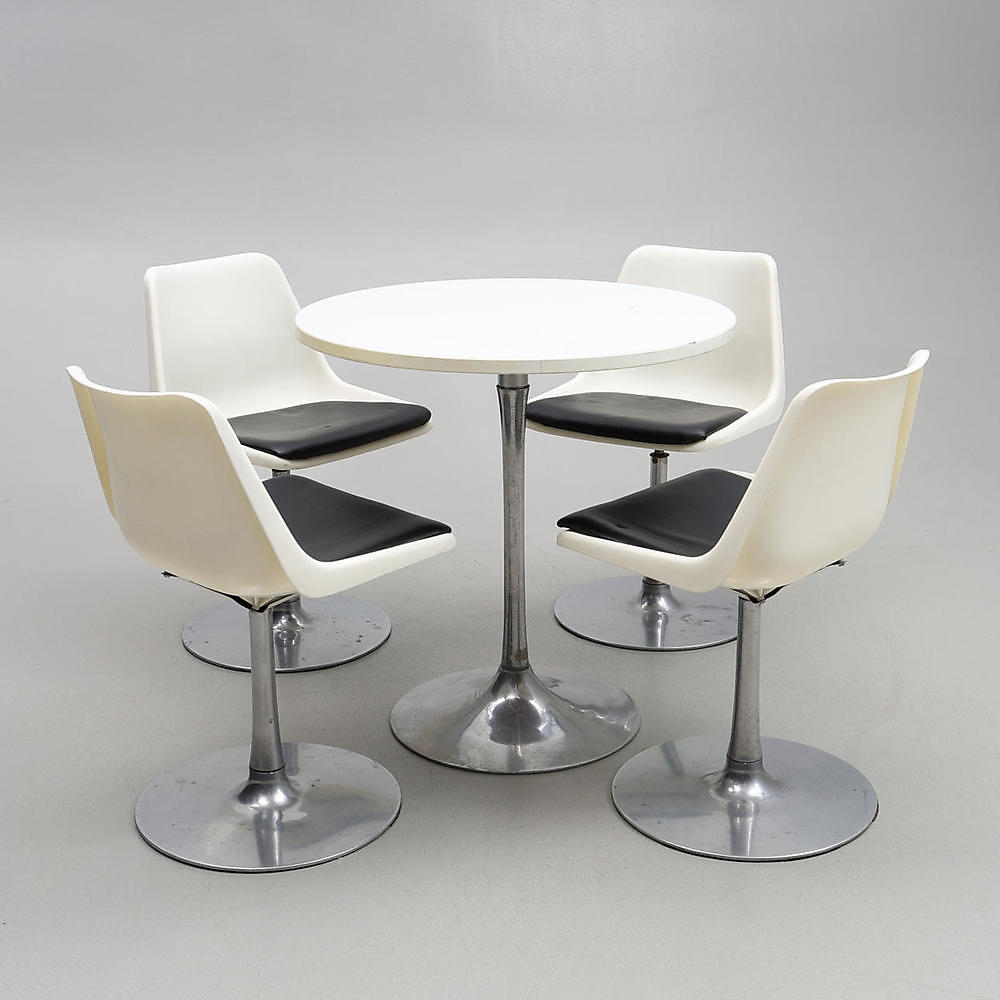
Seating Area, clubbed for 520 GBP at Auktionshuset Gomér & Andersson Jönköping.
Pioneering the Future of Everyday Living
The major breakthrough in Robin Day’s career arrived in 1948 with his award-winning design for low-cost, multifunctional furniture at New York’s Museum of Modern Art. This breakthrough displayed his dedication to functionality, efficiency, and accessibility, values that shaped his ongoing partnership with S. Hille & Co. As the company’s Design Director, Day introduced innovative uses of plywood, steel, and later, groundbreaking materials like polypropylene. His work democratized design, making thoughtfully crafted furniture available to the wider public. The 1963 Polypropylene chair remains a global icon, mass-produced, affordable, and an enduring example of how modern design can enhance daily life.
Lasting Impact: Design as a Force for Good
Robin Day’s genius left an indelible mark on British design and beyond, famously exemplified by his celebrated seating for London’s Royal Festival Hall in 1951. His career flourished through varied projects, from architectural interiors to graphic design, each guided by principles of clarity, utility, and social benefit. Day was a tireless advocate for the idea that great design should be accessible to everyone, dedicating himself to teaching, writing, and public commissions. Today, his timeless furniture remains in production, embodying the ethos of accessible, democratic design that defined his life’s work and secured his place among the most influential designers of the twentieth century.