Tom Dixon was born 1959 in Sfax, Tunisia, to a French-Latvian mother and an English father, before moving to England at the age of four. His multicultural background and early life experiences contributed to the eclectic sensibility that would later define his design work. Dixon’s entry into the world of design was unconventional, he was largely self-taught, having initially pursued a career in music before turning his creative energy to furniture making and design. In the early 1980s, while repairing motorbikes, he began experimenting with welding and metalwork, leading to his first iconic furniture pieces.
Innovative Approach to Furniture and Lighting
Dixon rose to prominence with his distinctive, industrial-inspired designs that merged raw materials with refined craftsmanship. His early works, such as the S Chair for Cappellini, showcased an inventive use of form and material. Later, as Head of Design at Habitat and later Artek, he shaped collections that balanced functionality with sculptural beauty. In 2002, he founded the Tom Dixon brand, focusing on furniture, lighting, and home accessories. Signature designs like the Beat lighting series and Melt pendants became instantly recognisable for their bold forms and material experimentation. Dixon’s style often reflects a fascination with processes, from metal spinning to blow-moulded plastic — resulting in objects that feel both contemporary and timeless.
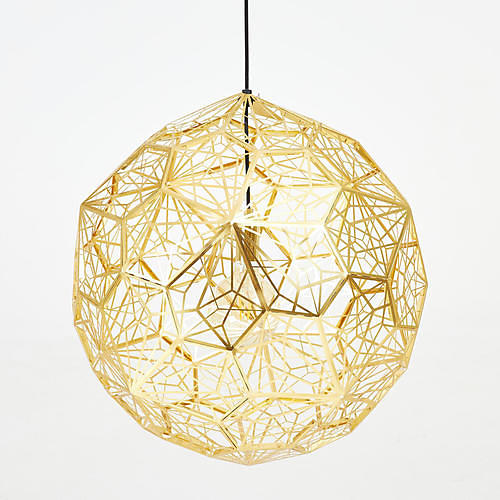
“Etch web”, clubbed for 543 GBP at Stockholms Auktionsverk.
Global Recognition and Legacy in Design
Over the decades, Dixon’s work has been exhibited in major design fairs and museums worldwide, and he has received numerous awards for his contributions to contemporary design. His creations are celebrated not only for their aesthetic appeal but also for their innovative manufacturing techniques. Today, Tom Dixon remains one of Britain’s most influential designers, continually pushing the boundaries of materiality and form. His career demonstrates how self-taught ingenuity, curiosity, and risk-taking can lead to a lasting impact on the global design landscape.