Jürgen Wrangel was born into the Baltic-German community, a cultural milieu that blended German traditions with the influences of the Baltic region. Raised in Riga, he was exposed to both the city’s historic architecture and its vibrant cultural life. His formal artistic education began locally before he moved to study in major European art centres, including Berlin and possibly Paris, where he encountered a range of styles from academic realism to emerging modernist movements. This diverse training gave him a flexible visual language that he would adapt to his own artistic aims.
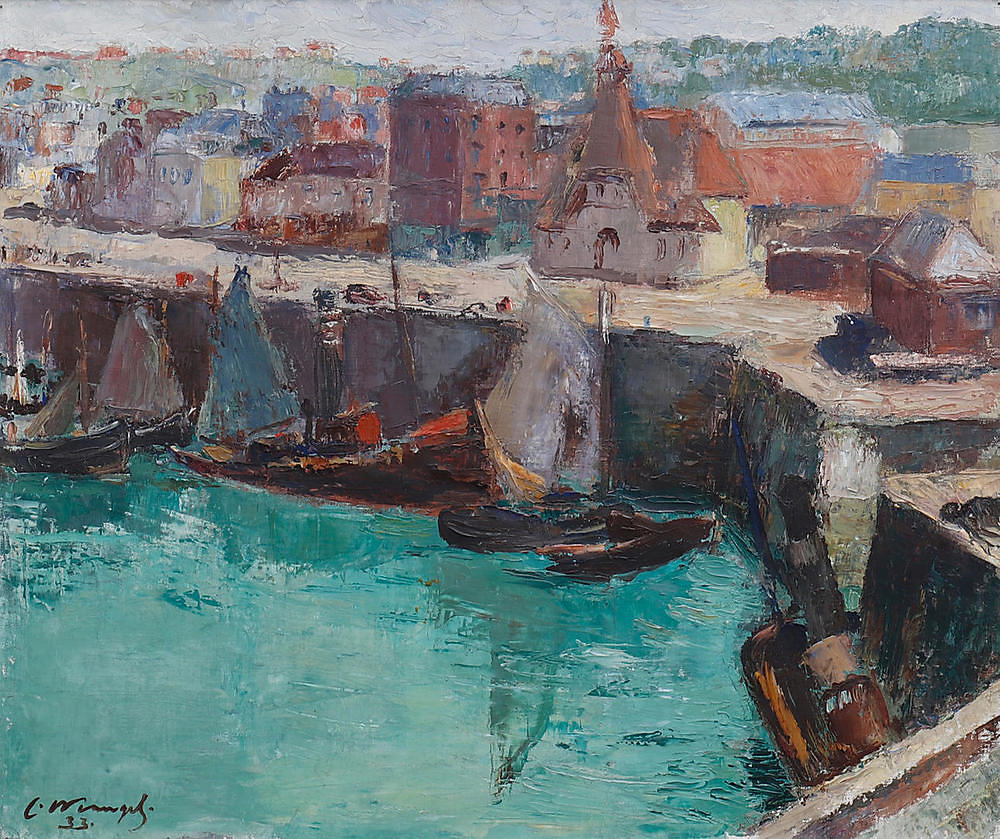
"The port of Dieppe", clubbed for 186 GBP at Crafoord Auktioner Lund.
Painter of Landscapes, Cityscapes, and Architectural Studies
Wrangel became particularly known for his depictions of landscapes and architectural views. His landscapes captured the rolling fields, forests, and coastlines of the Baltic region, often painted with a careful balance between atmospheric light and structural composition. In his cityscapes, he had a keen eye for architectural form, rendering buildings with precision while also conveying the life and character of the streets around them. His palette tended towards naturalistic tones, lending his work a timeless quality that allowed both subject and setting to speak clearly.
A Career Bridging Cultures
Exhibiting in Northern and Central Europe, Wrangel’s work reflected the cultural hybridity of his own background, neither fully aligned with one national school nor confined to a single tradition. His paintings were appreciated by audiences for their ability to document place and atmosphere with sincerity and skill. Many of his works entered private collections, while others found their way into regional museums. Today, Jürgen Wrangel is remembered as an artist who straddled worlds, Baltic, German, and European, leaving behind a visual record that captures the quiet dignity of the landscapes and cities he loved.