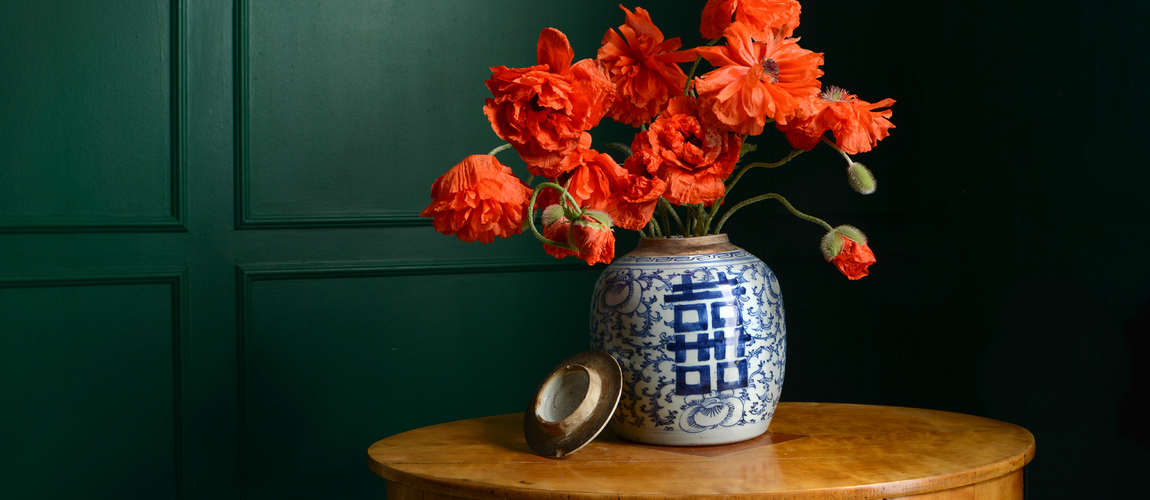
Throughout art history, flowers have been a recurring motif, prized for their beauty, richness of colour, and symbolic significance. As an independent genre, the floral still life gained prominence in the 17th-century Netherlands, where artists such as Ambrosius Bosschaert, Rachel Ruysch, and Jan van Huysum depicted the diversity of nature with meticulous detail. Over the centuries that followed, the genre underwent significant transformations—not least through its encounter with the new ideals of modern painting.
With the advent of Impressionism and the rise of modernism, the floral still life took on a new artistic meaning. Moving beyond a purely meticulous rendering of nature, flowers increasingly became a vehicle for exploring colour, form, and composition. During the first half of the 20th century, artists associated with both Expressionism and Colourism found a rich source of inspiration in floral motifs; the expressive power of color and the artist’s individual brushwork were often prioritised over a faithful, realistic depiction.
Over the centuries, the floral still life has held various meanings. Beyond celebrating the beauty of nature, flowers have frequently served as a meditation on the transience of life; yet, in modern painting, they also offered an opportunity to experiment with the inherent expressive qualities of colour and the medium of paint itself. Consequently, in 20th-century floral still lifes, we encounter not merely the forms of nature, but the artist’s personal interpretation of them.
Formstad Auktioner invites you to a themed auction celebrating the modern floral still life and its vibrant, colourful expressions from the mid-20th century.