Vi har desværre ingen genstande, der matcher din søgning.
- Hammerslags- og temaauktioner
- /
- A Collection of Accordions
A Collection of Accordions
FiltrerFiltrer og sorter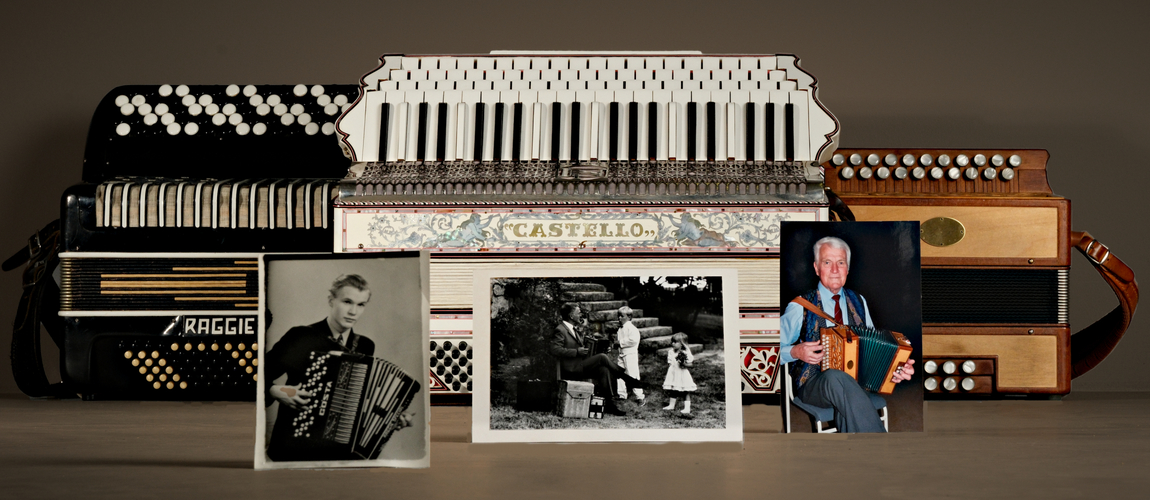
A Collection of Accordions
4 okt 2026 · Wickmans
At Ödbergska gården, at fiddlers' gatherings, and throughout Örnsköldsvik's community life, Gösta Johansson (1930–2026) was a familiar name. For many years, he helped organize the town's fiddlers' rally together with his fellow musician Affe Grankvist, and with his accordion and his stories, he held a natural place in the local music scene.
The accordion entered his life in 1983. "I bought an accordion thinking it would be easy to learn, since there are only a few keys to keep track of," he said in Nordsverige in 2018. "But it's not like that at all." Alongside playing, he collected instruments - one had been in his possession since his youth, but most came from the forty years he devoted to the accordion.
The collection spans from the mid-1800s - a flutina with a bone keyboard - to handbuilt instruments from the latter part of the 20th century. Here you'll find German accordions from Gessner, Meinel & Herold, and Hohner, as well as Hagström instruments from Älvdalen. The local connection is also reflected in a decal from Gunnar Östman's music shop in Örnsköldsvik. Among the highlights are two handbuilt two-row accordions: the very first two-row accordion made by Elis Brandt, and a French instrument from Atelier du Mourier in Coaraze.
The range spans from small single-row accordions to full-sized button and piano accordions, along with a bandoneon, concertinas, and a Russian Saratov garmoshka with bells - from Klingenthal to Saratov. Pierced wooden grilles, mother-of-pearl inlays, and colorful celluloid show just how varied the instruments are in appearance too.
35 auction lots. All the instruments are playable, though condition and restoration needs vary. What they share is that they've all stood in a musician's home.
Igangværende auktioner
Her er genstande fra vores arkiv, der matcher din søgningVis alle genstande