Gustaf Werder was born in Sweden in the interwar years, a period marked by both social change and the flourishing of modernist ideas. From a young age, he showed a strong interest in the visual arts, which led him to formal studies at Swedish art institutions during the mid-20th century. His training combined the fundamentals of academic drawing and composition with exposure to the experimental approaches that were reshaping European art at the time.
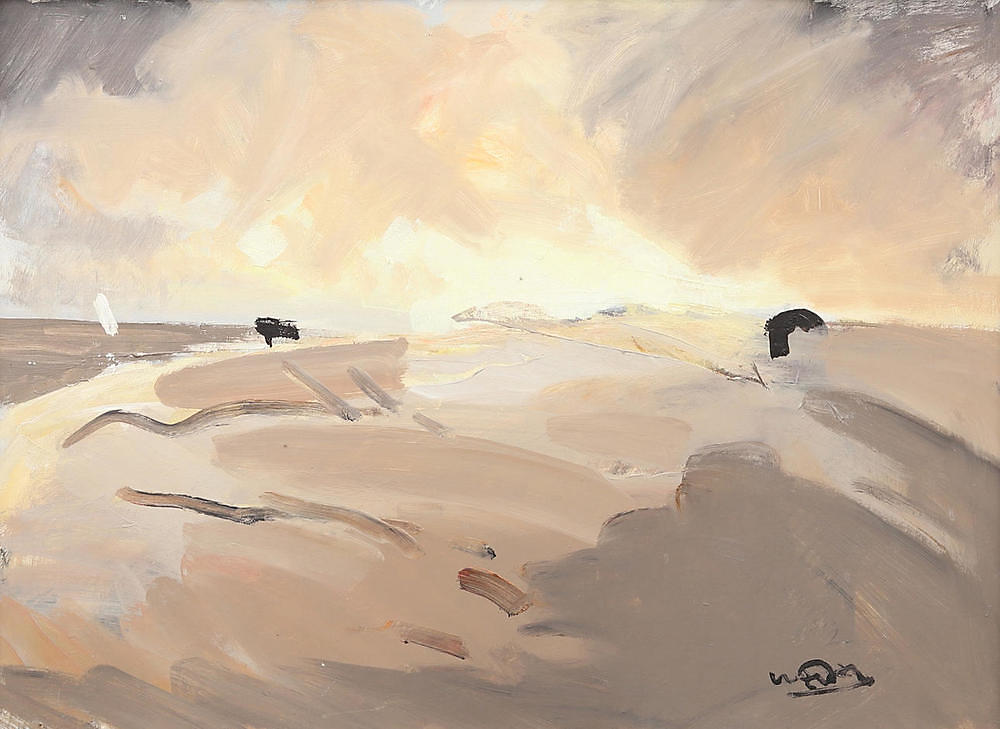
Coastal landscape, oil on board.
Blending Abstraction and Natural Inspiration
Werder’s work often occupied a space between abstraction and representation. While nature was a consistent source of inspiration, he approached it through a lens that prioritised mood, structure, and colour over strict realism. His paintings frequently featured layered textures, dynamic brushwork, and a palette that ranged from earthy neutrals to vibrant, emotive hues. This blending of organic reference with abstract form allowed him to explore deeper questions of perception, memory, and atmosphere.
Exhibitions, Reception, and Legacy
Werder exhibited at both regional and national levels, earning the respect of critics and peers for his dedication to pushing the boundaries of Swedish landscape painting. Collectors valued his ability to create works that were rooted in the familiar yet open to interpretation, offering viewers a personal entry point into his visual world. While he may not have sought international fame, his contribution to Sweden’s mid-century art scene was significant, representing a bridge between traditional Nordic naturalism and the more abstract expressions that would follow. Today, his paintings are appreciated not only for their aesthetic qualities but also for their place in the evolution of Swedish modernist painting.